Aquarium driftwood comes in two broad kinds: light, branching woods such as spider wood and manzanita that float at first, and dense woods such as mopani that sink straight away. Any of them can tint the water and grow a harmless white film. Light wood sinks once it has soaked up enough water.
The main types
These are the woods most often sold for aquascaping, and what the sources say about each.
| Wood | Look | Sinks? | Source |
|---|---|---|---|
| Spider wood | Pale, fine branching roots | Floats at first | Our spider wood page |
| Manzanita | Branching shrub wood from western North America | After about 4 to 7 days’ soaking | Tannin Aquatics |
| Talawa | Branchy but straight-lined; two-tone from sandblasting | Floats at first | Aquasabi |
| Moorwood (bog wood) | Dark brown, smooth, often slightly shiny | Floats if bought dry, sinks if bought wet | Aquasabi |
| Mopani | Gnarled, two-tone, little branching | Usually straight away | Aquasabi |
| Mekong | Straight and narrow, with deep furrows | Straight away | Aquasabi |
| Malaysian | Dark brown and craggy | Usually straight away (sellers differ) | Buce Plant, Tannin Aquatics |
Aquasabi’s advice for any layout is to stick to one kind: it says a single wood type looks much more harmonious. The light, branching woods suit fine detail, and Terrarium Tribe suggests saving the heavy woods such as mopani for the centrepiece.
Malaysian driftwood
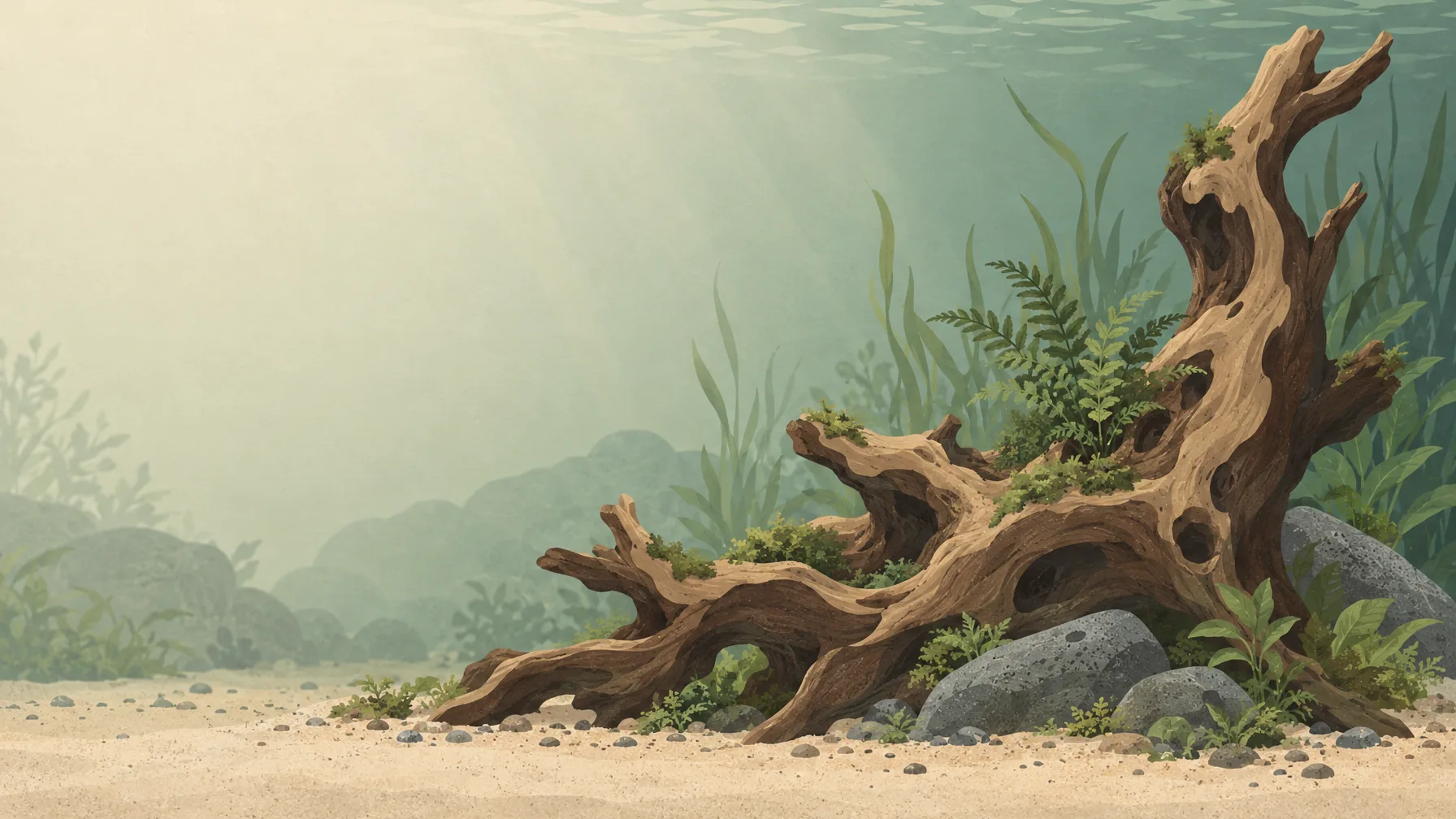
Malaysian driftwood is the classic dark aquarium wood, rich brown and craggy. Terrarium Tribe describes it as dark hardwood from “a variety of trees all native to Malaysia”. No reliable source names the species, so treat any listing that does with caution.
Most sellers, including Buce Plant and Bulk Reef Supply, call it dense and say it usually sinks without a pre-soak. Tannin Aquatics sells a lighter, porous grade that needs soaking to sink, so check the description of the piece you buy. Expect tannins: Tannin Aquatics calls it “loaded with tannins”. Terrarium Tribe rates it the only wood that comes close to mopani for toughness.
How to prepare driftwood
- Rinse and scrub with a soft brush to remove dirt and debris, as Tannin Aquatics suggests. Don’t use bleach: Aquarium Science warns it can stay in the wood in a form water conditioner can’t neutralise.
- Soak it in a separate container. Aquasabi’s classic method is a few weeks in water, changed from time to time, in an open container so gas can escape. Tannin Aquatics says there is no real shortcut: the wood has to waterlog to sink.
- Or soak it in the tank. Aquasabi suggests weighting it down, wedging it between stones, or fixing it with glue, silicone or cable ties. ADA’s advice is a stone on top for about a week.
- Check every piece. Aquasabi says to make sure each piece stays down before you use it in a layout, or a floating root can wreck the scape when you fill the tank.
Dense woods such as mopani and Mekong can skip most of the soak, though a pre-soak still draws out some of the tannins.
Should you boil driftwood?
The sources disagree more on this than on anything else about wood.
| Source | View on boiling |
|---|---|
| Buce Plant (shop) | Boil 1 to 2 hours to help release tannins |
| LiveAquaria (shop) | Boiling 1 to 2 hours first may shorten the soak to 48 to 72 hours |
| Tannin Aquatics | Speeds manzanita up by a day or two at most; hardly worth the trouble |
| ADA | Even boiling can’t get the tannins out completely |
| Aquasabi | Never boil or scald moorwood, which may rot later |
| Aquarium Science | Don’t boil wood: it only reaches surface tannins, softens the wood, invites water mold and doesn’t make wood sink |
Soaking does everything boiling claims to, more slowly and without the risks. Skip the pot unless the piece is small and you’re short of time, and never boil moorwood. Aquarium Science also warns against baking wood in an oven, which is a fire risk.
Brown water from tannins
Driftwood releases tannins and other humic substances that tint the water tea-brown, and Aquasabi says the denser woods are the most likely to do it. It is harmless. ADA says the amount that leaches naturally does no harm to the tank’s life, and Aquarium Science says tannic acid lowers pH only very slightly, from about 7.4 to 7.3.
If you’d rather have clear water, ADA says repeated water changes clear it gradually, and Aquarium Science says activated carbon and tannin-removing resin media both absorb it. Don’t expect it to stop for good: Aquarium Science says wood that releases tannin will do so for years. Some keepers want the tint, and a blackwater biotope is built around it.
The white fuzz on new wood
A white, slimy or cottony film often grows on new driftwood in its first weeks. The sources can’t agree what it is: Aquasabi says bacteria, ADA and Tannin Aquatics call it a fungus, and Aquarium Science says it is water mold. They all agree it is harmless and temporary.
Aquasabi says it feeds on sugars left in the wood and vanishes once they are used up, and that snails, shrimp and some fish eat it. You can siphon it off or brush it away. Aquarium Science says it typically lasts four or five weeks and won’t spread to fish. Its one warning: if the mold persists, the wood smells bad or starts to fall apart, the wood is too soft and should come out.
Can you use wood you found yourself?
Aquarium Science says yes, with care. Its test is to smell the wood: dead wood, wet or dry, with no smell of sap or chemicals is fine, while fresh pine, fresh cedar and strongly scented eucalyptus are not. It also says to smell shop-bought wood, because some suppliers oil it and the oil has killed fish. Tannin Aquatics takes the cautious line: the wood must be dry with no live wood or sap, and it is better to buy from sellers of aquarium-safe wood.
Aquarium Science also dismisses the idea that only hardwoods are safe, saying a wood’s hardness has little to do with how long it lasts. Wood from a stream can carry hydra or planaria, which it says matters mainly in shrimp tanks.
Planting on driftwood
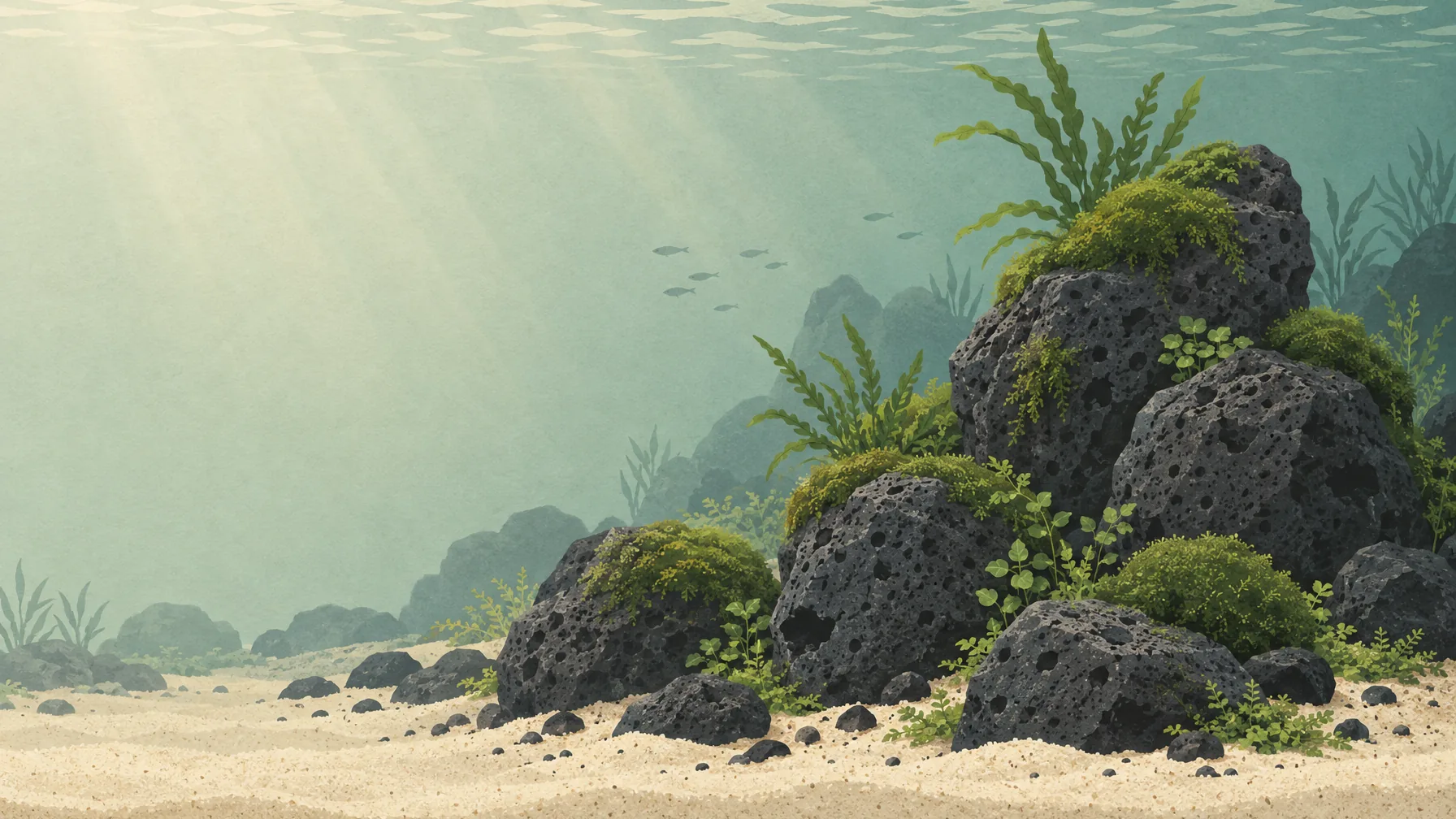
Aquasabi says most epiphytes grow onto wood over time: mosses, ferns, Anubias and Bucephalandra. Moss is also useful for hiding a cut edge or an awkward spot, and both Java moss and Java fern attach this way. Porous lava rock beside the wood gives the same plants another surface, and Aquasabi says black lava works very well with driftwood.
Aquarium driftwood questions
How long does driftwood take to sink?
It depends on the wood. Dense woods such as mopani and Mekong sink straight away. Light woods need to waterlog: Tannin Aquatics says manzanita takes about 4 to 7 days, and Aquasabi’s classic soak runs to a few weeks.
Should you boil driftwood before putting it in an aquarium?
Sources disagree. Shops recommend 1 to 2 hours to release tannins, while Aquarium Science says boiling softens wood and doesn’t help it sink, and Aquasabi says never to boil moorwood. Soaking is the safer route.
Is the white fuzz on driftwood harmful?
No. Aquasabi, ADA, Tannin Aquatics and Aquarium Science all call it harmless and temporary, though they disagree on whether it is bacteria, fungus or water mold. Snails and shrimp eat it, and it usually clears within weeks.
Sources: Aquasabi, Preparing driftwood; Aquasabi, Types of hardscape; Aquasabi, Driftwood in a tank with invertebrates; ADA, Hardscape materials (via Aquasabi); Aquarium Science, Wood; Aquarium Science, Water mold; Tannin Aquatics, A few notes on wood in the aquarium; Tannin Aquatics, ‘Wood’ you? Well, yes, I will; Tannin Aquatics, ‘Wood’ you believe this; Tannin Aquatics, Manzanita; Terrarium Tribe, Wood for terrariums; Terrarium Tribe, Mopani wood guide; Buce Plant, Malaysian Driftwood (shop listing); Bulk Reef Supply, Malaysian Driftwood (shop listing); LiveAquaria, Malaysian Driftwood (shop listing); Tannin Aquatics, Malaysian Driftwood (shop listing).