
The rocks in an aquascape do two jobs at once: they shape the layout, and some of them change your water chemistry. Choosing stone is not only about looks. A rock that raises your water’s hardness can suit one tank and sabotage another. Here are the common aquascaping rocks and how to pick the right one.
What rock does to your water
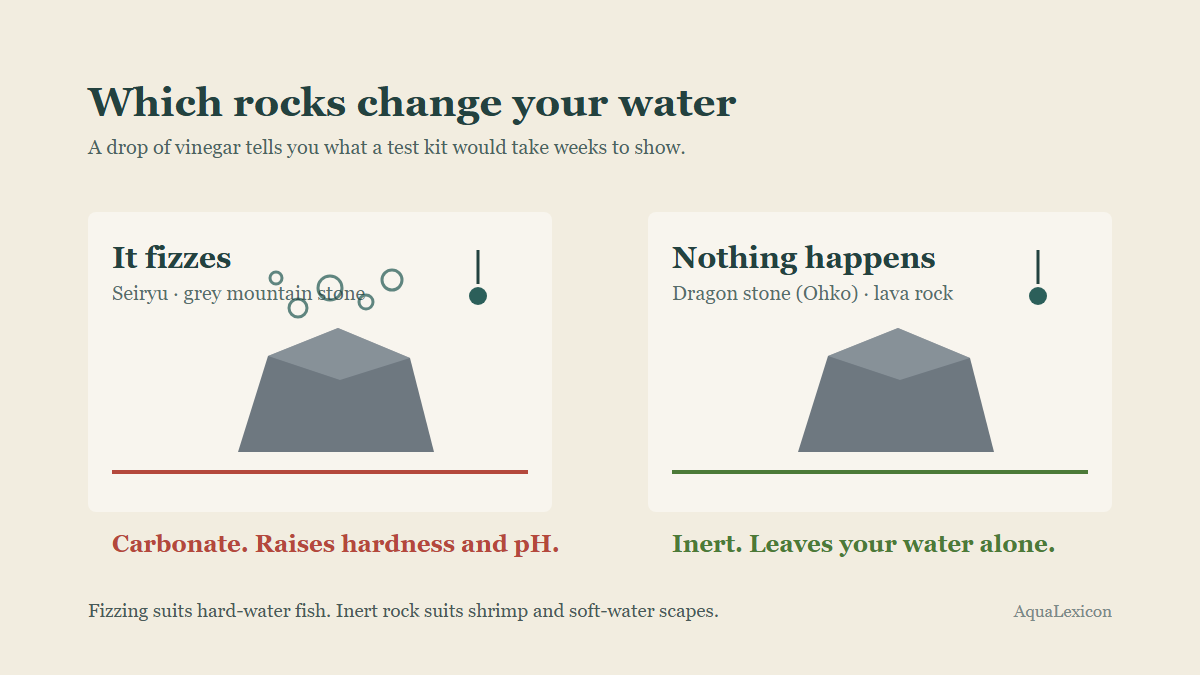
This is the bit beginners miss. Carbonate (limestone-type) rocks slowly dissolve and raise your water’s hardness and pH, while inert rocks leave it alone. There’s a simple field test: put a drop of vinegar on the stone. If it fizzes, it contains carbonate and will harden your water. That is fine for hard-water fish and a problem for soft-water shrimp and plants.
The common types
- Seiryu stone: dramatic jagged grey rock with white veining. It’s limestone-based, so it raises hardness and pH. The classic Iwagumi stone, but best where hard water suits your livestock.
- Dragon stone (Ohko): tan, knobbly and full of crevices. Largely inert, so it has little effect on chemistry, which makes it forgiving and beginner-friendly.
- Lava rock: lightweight, porous and inert. Doubles as biological filter media and a cheap base layer to build height.
Matching rock to your tank
For a soft-water or shrimp tank, lean on inert stone such as Dragon stone or lava rock, so you are not fighting rising hardness. If your fish are happy in harder water, or you’re buffering deliberately, Seiryu is fair game. On looks: jagged Seiryu reads as mountains for an Iwagumi, while chunky Dragon stone suits caves, overhangs and texture. Whatever you choose, rinse it well and lay your hardscape before planting.
Questions about aquascaping rock
Do aquascaping rocks change water parameters?
Some do. Carbonate rocks like Seiryu raise hardness and pH as they dissolve. Inert rocks like Dragon stone and lava rock do not. The vinegar fizz test tells you which you’ve got.
Which rock is best for beginners?
Dragon stone. It’s inert, so it will not alter your water chemistry, and its texture is forgiving and easy to arrange into a natural-looking layout.
Can you use rocks collected from outside?
Cautiously. Unknown rocks can leach minerals or carry contaminants, so test with vinegar for carbonate, scrub and rinse thoroughly, and avoid anything metallic, crumbly or from a polluted area.