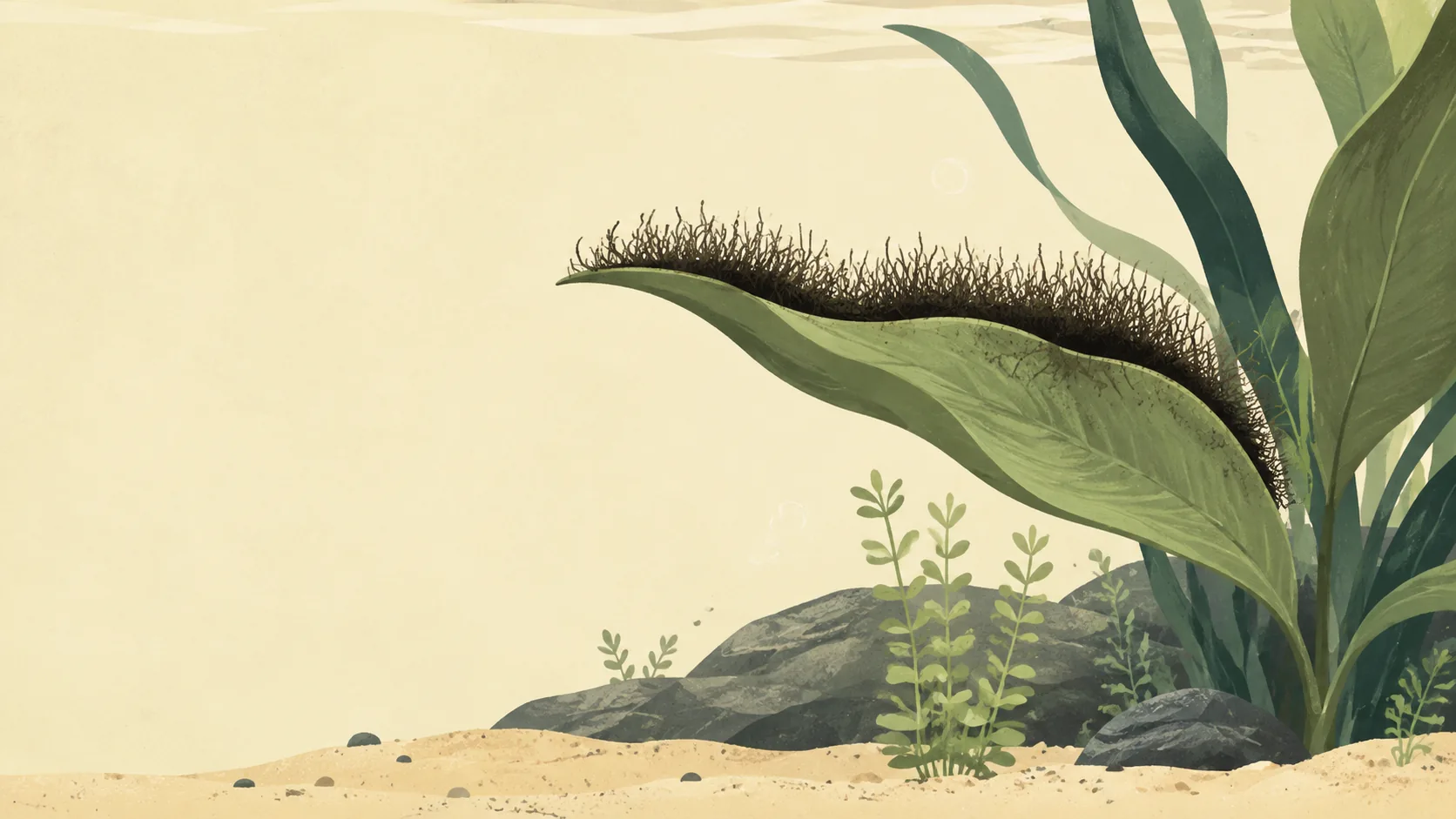
Black beard algae is the dark, bristly growth that grips plant edges, wood and equipment in planted tanks. It is a red alga, sold and discussed under the names black beard or brush algae. It is stubborn rather than dangerous, and it almost always points to something specific being off in the tank.
What it actually is
Black beard algae covers species in the genera Audouinella and Rhodochorton. It attaches hard to surfaces rather than drifting, which is why wiping does so little and why it tends to colonise the slowest-growing leaves first. Older Anubias leaves are a classic site. If the growth is green and soft rather than dark and bristly, it is more likely hair algae. Hard green dots are green spot algae, and a dark, slimy film that lifts off easily is cyanobacteria.
Why you have it
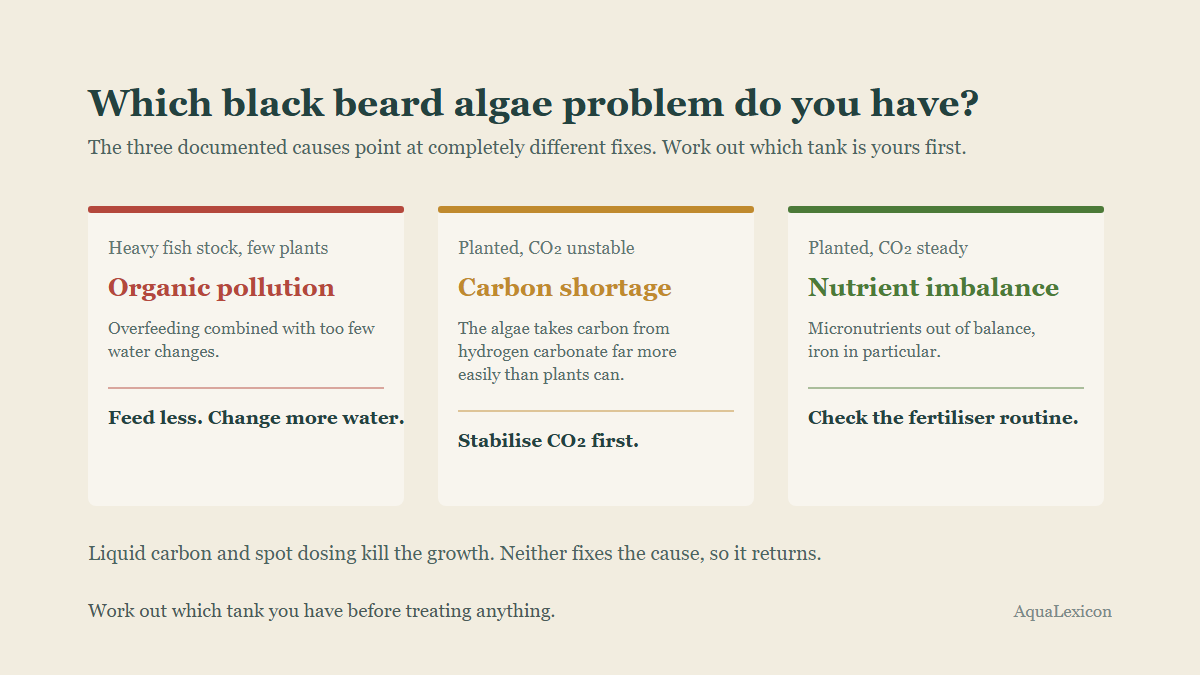
There are three well-documented causes, and they point at different tanks.
- Organic pollution: in tanks with a heavy fish stock and few or no plants, the black variant is common. The cause there is high organic pollution from overfeeding combined with too few water changes.
- CO2 shortage: where CO2 is short, these algae can take the carbon they need from hydrogen carbonate, and they do it far more easily than higher aquatic plants can. That is the mechanism behind the usual advice that unstable or insufficient CO2 brings on black beard algae. Your plants stall, the algae does not.
- Nutrient imbalance: in properly planted tanks it often appears when micronutrients are out of balance, iron in particular.
Work out which tank you have before you treat anything. A heavily stocked, lightly planted tank has an organic waste problem. A high-tech planted tank creeping with it has a carbon or nutrient problem.
Getting rid of it
Liquid carbon is the usual first move. Dose per the manufacturer’s instructions and the algae should turn whitish or pink within a few days, which is the sign it is dying rather than a trick of the light.
If that does not clear it, treat the affected spots directly rather than the whole tank. Spot dosing an algicide or hydrogen peroxide onto the growth is the targeted version of the same approach, and it works on patches that whole-tank dosing leaves behind.
Neither is a fix on its own. If the underlying cause is still there, it comes back. Sort the feeding and water changes, or stabilise the CO2, and the treatment gets to stay ahead of it.
Black beard algae questions
Is black beard algae harmful to fish?
No. It does not harm fish or shrimp. The damage it does is to plants, by covering leaves and blocking the light they need, and to your patience.
Why does black beard algae keep coming back?
Because treating the growth does nothing about the cause. If the tank still has excess organic waste, unstable CO2 or a micronutrient imbalance, new growth follows the old. Fix the condition first and treat second.
Should I throw away plants covered in black beard algae?
Usually not. Badly affected old leaves are worth removing, since slow-growing plants rarely recover a heavily colonised leaf, but the plant itself normally recovers once conditions improve and it pushes new growth.
Sources: Aquasabi, Black beard algae (BBA).