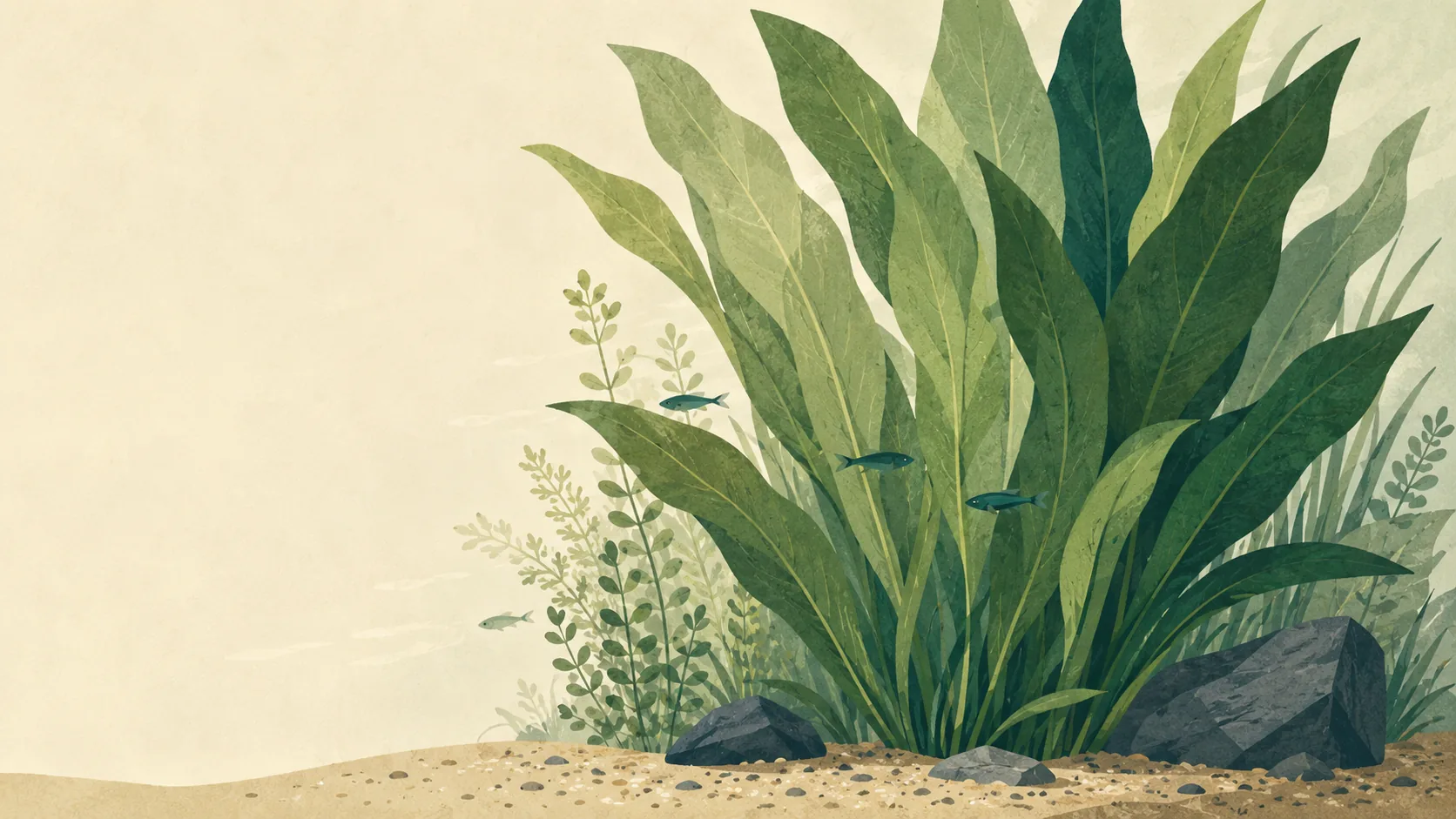
The Amazon sword is the classic large background plant for a planted aquarium. It grows tall, broad leaves from a central rosette, and Tropica rates it easy, with a low demand for light and CO2. The one thing that pays off is a well-fed substrate, because it takes up nutrients through its roots.
Feed it through the roots
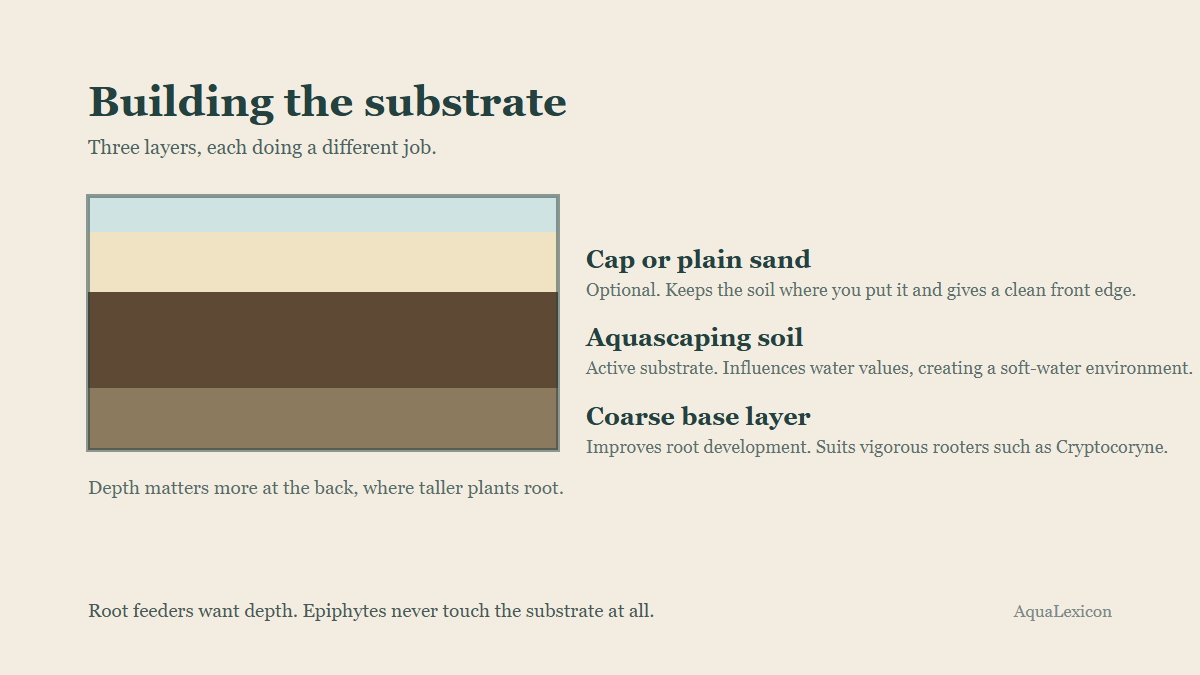
Echinodorus grisebachii feeds heavily through its roots. Aquasabi notes that Echinodorus species actively absorb nutrients through their roots, and Tropica says a nutritious bottom promotes growth, so put the nutrients where the roots are.
Use root tabs or fertiliser sticks pushed into the substrate near the plant, or grow it in a nutrient aquasoil that supplies them directly. If the older leaves start to yellow, our yellowing leaves page covers which nutrient is likely short.
Give it room
| Requirement | Amazon sword |
|---|---|
| Light demand | Low |
| CO2 demand | Low |
| Difficulty | Easy |
| Growth rate | Not rated by Tropica |
| Placement | Rosette, background |
This is a big plant. Put it at the back and give it space. Tropica recommends it for quite large aquariums and warns that it needs pruning to stop it depriving the plants underneath of light.
Its size and loose habit make it a natural fit for the jungle style, where overgrowth is the point, and for a South American biotope, since it belongs to that region.
Amazon sword questions
Do Amazon swords need root tabs?
In inert gravel or sand, yes. It is a heavy root feeder, so it needs nutrients at the roots. In a nutrient aquasoil the substrate already supplies them.
Does an Amazon sword need CO2?
No. Tropica rates its CO2 demand as low, and says it does well even in poorly lit aquariums because it grows towards the light. A well-fed substrate matters more to this plant.
How big does an Amazon sword get?
Tropica gives ‘Bleherae’, the classic form, a height of 20 to 50 cm, which makes it a background plant in most tanks and too big for a small one. Plan its position on the assumption it will fill the space.
Sources: Tropica, Echinodorus grisebachii 'Bleherae'; Aquasabi, ADA Substrate Fertilizers.