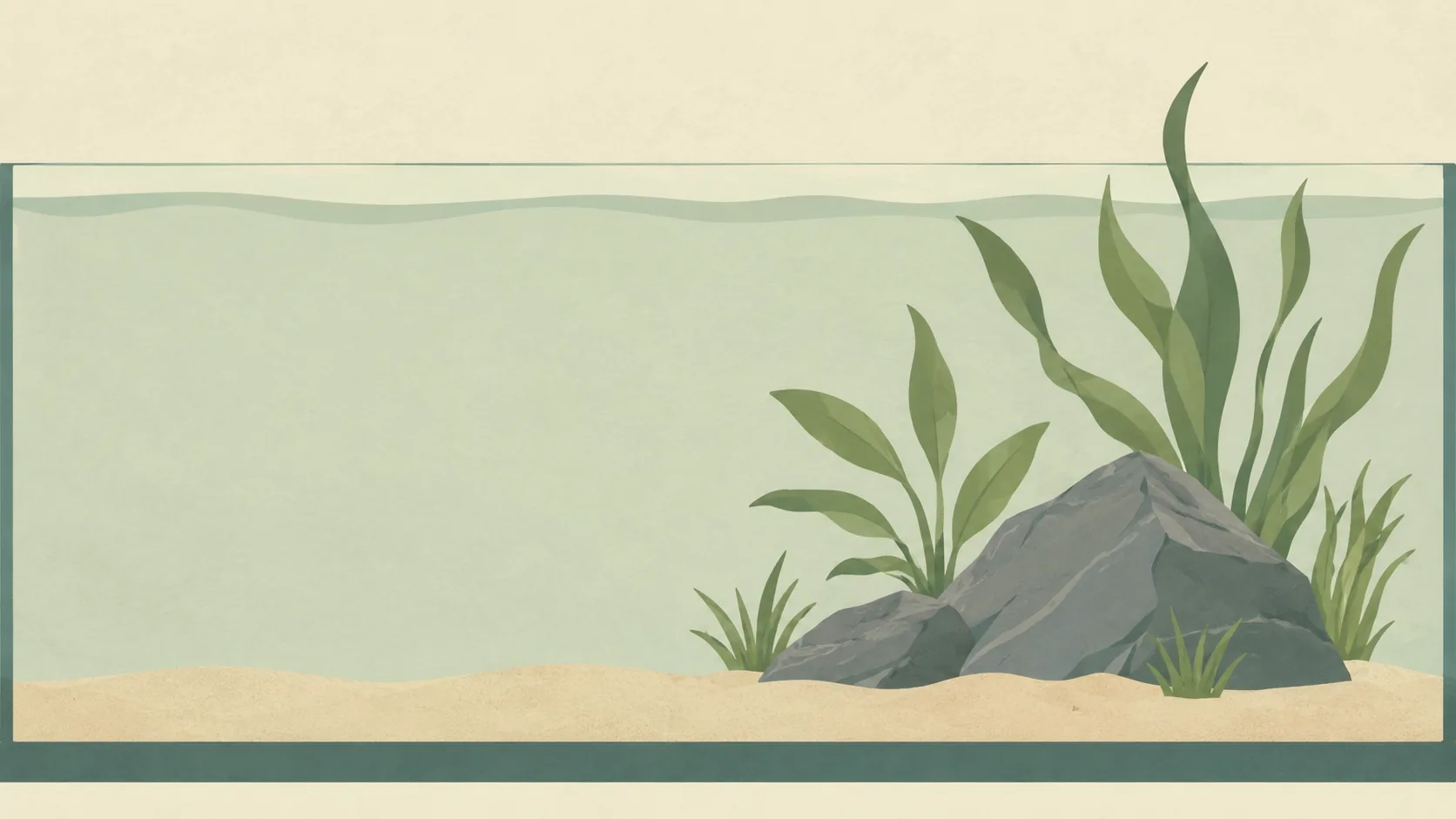
Negative space in an aquascape is the open water and bare substrate you deliberately leave unplanted. It is not a gap waiting to be filled. Restraint is what gives the planted parts something to be measured against, and it is the hardest discipline for a beginner to accept.
The instinct to fill
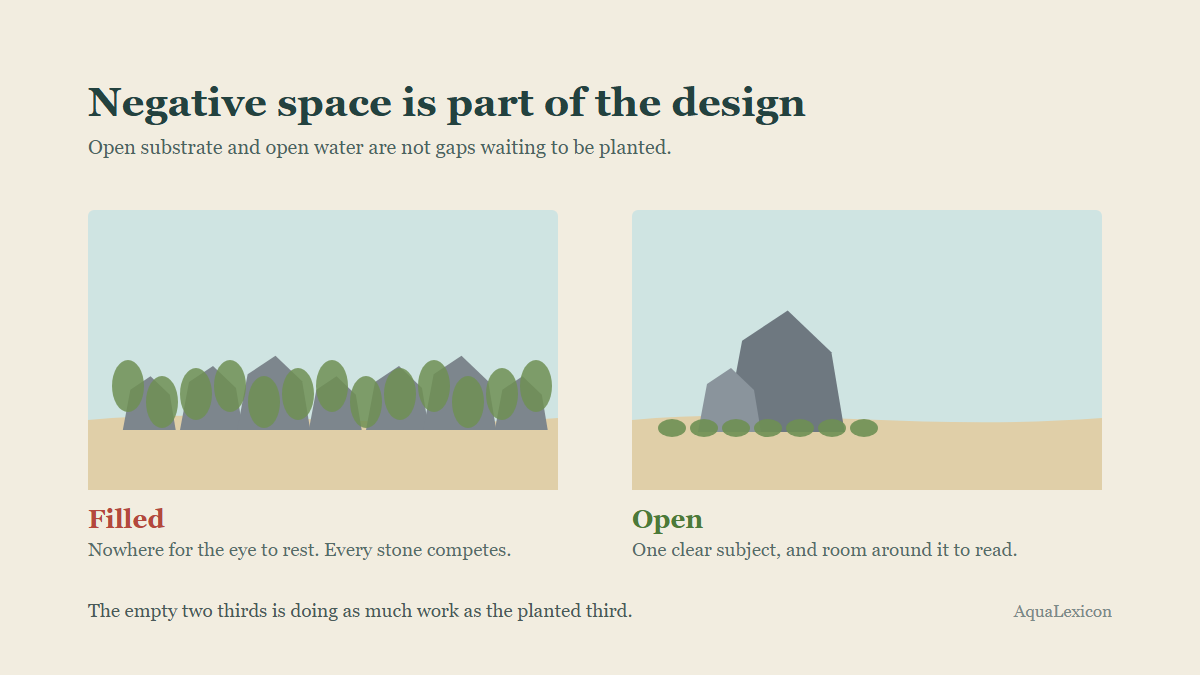
Almost everyone plants too much at first. An empty corner looks unfinished, so it gets a plant, and then the next corner does too. The result is a tank that is full of interesting things and impossible to look at, because nothing is more important than anything else.
What the empty part does
- It creates scale. Open water above a low carpet makes a small tank read as a large landscape.
- It isolates the subject. A focal point needs room around it, or it is just one object among many.
- It gives fish somewhere to be. A shoal swimming through open water is part of the composition and needs the space to do it.
The style that depends on it most
Iwagumi is built almost entirely on this idea. A handful of stones, one carpeting plant, and a great deal of nothing. Take the empty space out of an Iwagumi and there is no style left, only some rocks.
The opposite pole is the jungle style, which fills everything on purpose. That works because the overgrowth is the subject. What does not work is filling a tank by accident, one plant at a time, while intending something composed.
Keeping it once you have it
Plants grow. A layout with good open space in month one closes up by month four unless you trim it back deliberately. Maintaining negative space is an ongoing decision rather than something set at the start, and the rule of thirds is a useful check when you are deciding what to cut.
Questions about open space
How much of a tank should be empty?
There is no fixed proportion, but if you cannot point at a clearly open area, there probably is not one. Minimalist styles leave most of the tank open; denser styles leave less, and the point is that it is a choice either way.
Does an empty tank look unfinished to visitors?
Usually the opposite. A composed layout with room to breathe reads as deliberate, where a densely filled one often reads as a collection of plants rather than a scene.
Is bare substrate the same as negative space?
It counts, and open water counts too. A stretch of clean sand in the foreground and an empty upper third are both doing the same job of giving the planted areas somewhere to sit against.