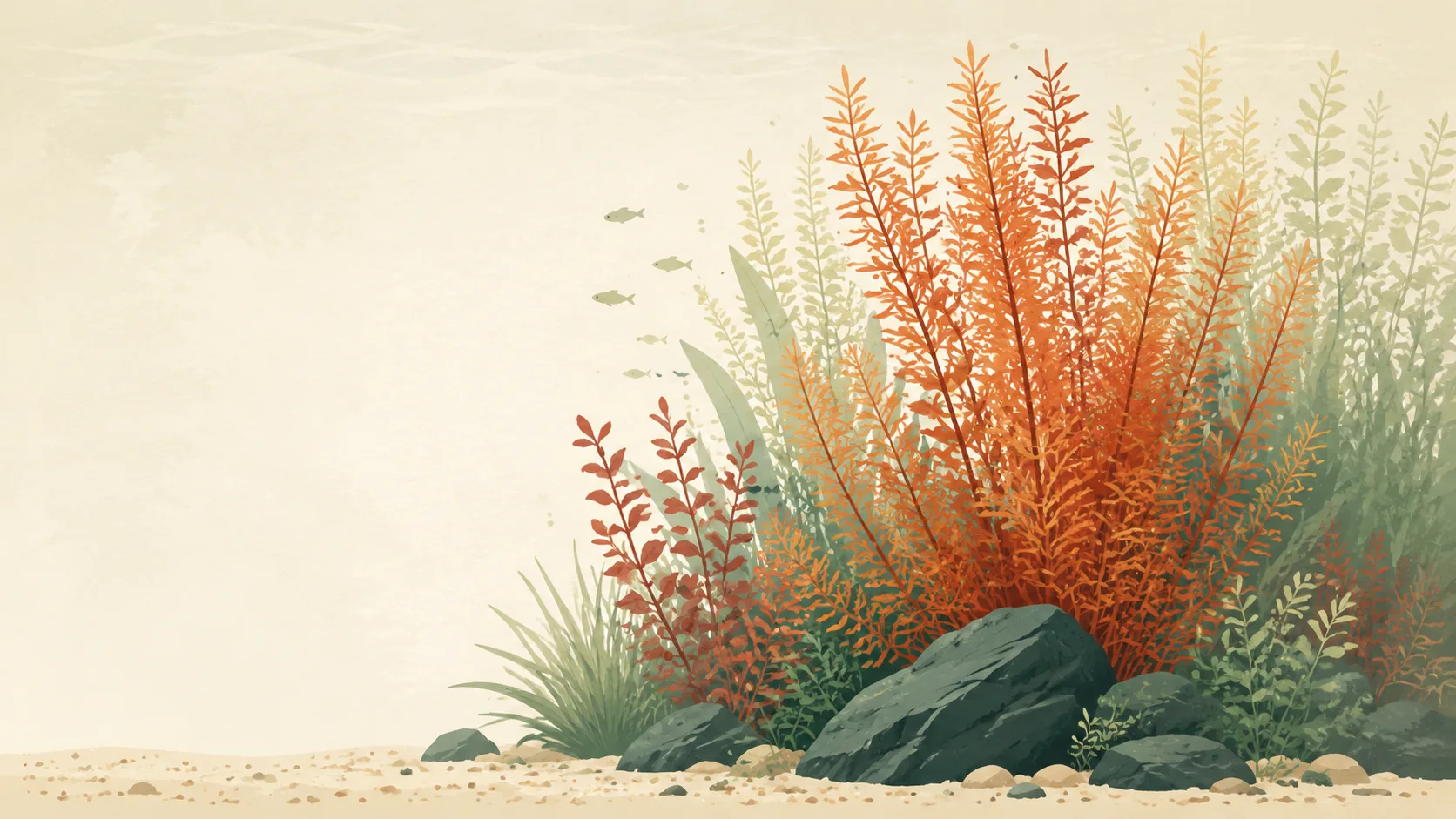
Rotala rotundifolia is the stem plant people grow when they want colour. Tropica calls it relatively undemanding and rates it easy, with a low demand for light and CO2, but it needs good light to produce red leaves. In lower light it stays green, just without the colour it is known for.
Getting the colour
Light is what brings out the red in Rotala rotundifolia. Tropica rates its CO2 demand as low, so the colour does not depend on injecting CO2.
Green Rotala is not a failure. It is what the plant looks like in a low-tech tank, and it grows readily there. If the colour is the reason you want it, be honest about whether your tank can supply the conditions before buying it.
Trimming and propagating
| Requirement | Rotala rotundifolia |
|---|---|
| Light demand | Low (good light for red) |
| CO2 demand | Low |
| Difficulty | Easy |
| Growth rate | Medium |
| Placement | Stem, background |
Trim it regularly. Tropica notes that it forms side shoots willingly and becomes compact and bushy, which makes it hard for light to reach the lower leaves, so prune it frequently. Cut the stems and replant the tops, which is the standard way stem plants are propagated.
That trim-and-replant cycle is the entire discipline of the Dutch style, where tiered rows of stem plants carry the whole composition and the tidiness is what gets judged.
Rotala questions
Why is my Rotala rotundifolia green and not red?
Not enough light, most likely. Tropica says it needs good light to produce red leaves. It is healthy either way.
Does Rotala need CO2?
No. Tropica rates its CO2 demand as low. Good light is what it needs for red leaves.
How do you propagate Rotala?
Cut a stem and replant the top portion in the substrate. It roots readily, and the cut stem branches below the cut, so trimming thickens the stand as well as multiplying it.
Sources: Tropica, Rotala rotundifolia.